Container Drayage Explained: Import, Export, Chassis, Free Time & Empty Returns
A practical guide to container drayage for importers, exporters, brokers, and logistics teams, covering terminal pulls, chassis, appointments, free time, empty returns, and the details that keep containers moving.
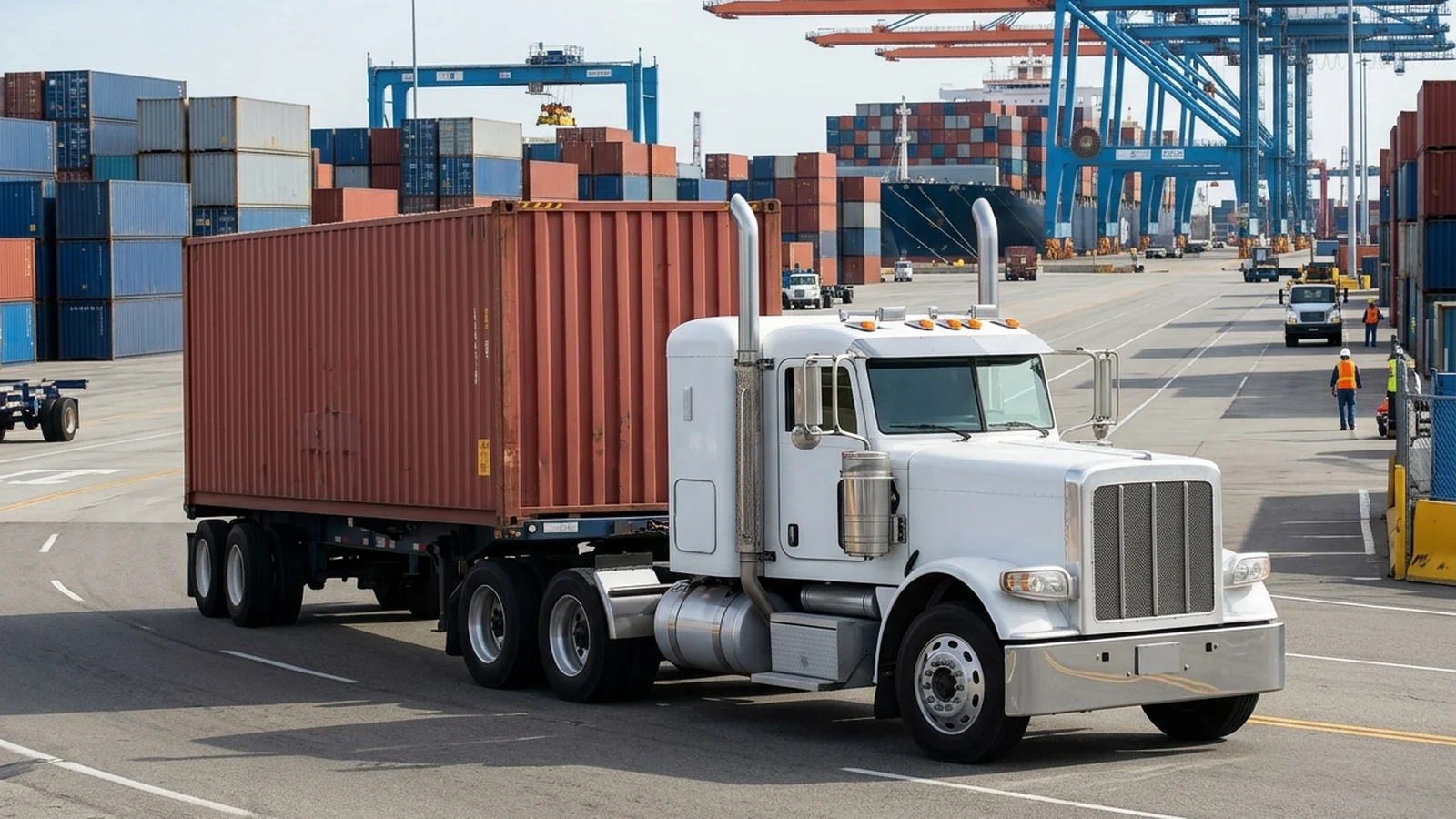
Container drayage can be one of the shortest transportation moves in the supply chain, but it can also be one of the most operationally complicated.
A container may only need to travel a few miles from a marine terminal to a warehouse. The mileage is simple. The move around it may involve a vessel release, terminal availability, an appointment, a chassis, a receiving window, free-time deadlines, equipment requirements, an empty-return location, and communication between several different parties.
That is why successful drayage is not simply about putting a truck under a container.
It is about coordinating the entire container drayage cycle.
For importers, exporters, freight forwarders, NVOCCs, brokers, warehouses, manufacturers, and distribution teams, understanding that cycle makes it easier to plan capacity, control avoidable delays and costs, and know what information a drayage provider needs before the truck is dispatched.
What Is Container Drayage?
Container drayage is the movement of an intermodal container over the road between a port, rail ramp, warehouse, distribution center, manufacturing facility, or another nearby or regional point.
A typical import drayage move may look like this:
- The loaded container becomes available at the marine terminal or rail ramp.
- Release and appointment requirements are confirmed.
- A tractor and appropriate chassis are assigned.
- The container is pulled from the terminal.
- It is delivered to the customer or receiving facility.
- The container is unloaded or dropped, depending on the arrangement.
- The empty container is returned to the location designated by the ocean carrier or equipment provider.
An export move generally works in the opposite direction.
The empty container may first need to be picked up, taken to the shipper for loading, and then returned loaded to the marine terminal before the vessel cutoff.
The physical transportation is only one part of the process.
Import Drayage: From Terminal to Delivery
For an import container, the move normally begins only after several conditions line up.
The freight must be released. The container must be available. Any required terminal appointment must be secured. The correct equipment must be available. The customer must also be ready to receive the freight.
If one of those pieces is missing, the truck may be ready while the container is not.
That is why import drayage planning should begin before the container is physically available.
Important information includes:
- Container number
- Container size and type
- Marine terminal or rail ramp
- Delivery address
- Delivery appointment or receiving hours
- Cargo weight
- Refrigerated requirements, if applicable
- Hazmat status, if applicable
- Overweight requirements, if applicable
- Release status
- Last free day or other applicable time limits
- Empty-return instructions
A clean drayage move starts with complete information.
Export Drayage: Working Backward From Cutoff
Export container transportation requires a different type of planning.
Instead of waiting for freight to become available at the terminal, the transportation plan often works backward from the export cutoff.
The questions become:
- When can the empty container be picked up?
- Does the equipment provider have the correct container and chassis equipment available?
- When will the shipper load it?
- Does the facility require an appointment?
- Is the cargo overweight or regulated?
- Does the container need temperature control?
- When must the loaded container be back at the terminal?
- Is the terminal accepting that equipment when the truck arrives?
Export timing matters because a missed cutoff can affect the shipment far beyond the truck move itself.
The goal is to build enough time into the process for equipment pickup, loading, transportation, terminal access, and unexpected delays without creating unnecessary equipment time.
What Is a Chassis?
The ocean container does not normally travel on its own wheels.
A chassis is the wheeled frame that carries the container behind the tractor.
That sounds simple, but chassis availability and chassis type can materially affect a drayage move.
The equipment has to match the container size and the weight of the freight.
A standard move may need ordinary container chassis equipment. An overweight shipment may require a different chassis configuration and additional planning around legal routing, axle weights, and permits.
That becomes especially important on overweight moves, where the chassis configuration, axle distribution, permits, and legal routing may all affect how the container can move.
Refrigerated containers may also require power equipment such as a genset, depending on the move and operating requirements.
This is why equipment requirements should be identified before dispatch.
Discovering at the terminal gate that a load needs different equipment is one of the easiest ways to lose time.
Why Appointments Matter
Marine terminals, rail ramps, warehouses, and distribution centers can all have appointment or receiving restrictions.
The truck schedule therefore has to connect two separate operating environments:
The pickup side, when the terminal or rail ramp will release the container.
The delivery side, when the customer will receive it.
Those windows do not always line up automatically.
A container might be available in the morning while the receiver only has an afternoon appointment, or the next available receiving appointment could be several days out. A terminal appointment might move. A warehouse may have strict receiving hours. A chassis or genset may need to be secured before the pickup window.
A short port move can become operationally difficult when terminal availability, receiving appointments, equipment availability, and empty-return requirements do not line up.
The drayage provider is coordinating all of those moving pieces at once.
That is one reason communication can be just as important as, if not more important than, mileage.
What Does "Free Time" Mean?
In container shipping, free time generally refers to the period during which the container or terminal equipment can remain in a particular stage of the process before additional charges may begin to apply.
The exact rules depend on the terminal, ocean carrier, equipment provider, contract, and shipment.
For an importer, the most important lesson is simple:
Do not wait until the last free day to begin transportation planning.
By that point, the container may still need an appointment, a chassis, a truck, a receiver, and a confirmed empty-return location based on the equipment provider's instructions.
If any one of those becomes difficult, the operating window can close quickly.
The transportation provider should know the important timing information early enough to plan the move rather than react to it.
Demurrage, Detention and Per-Diem: Why the Terms Matter
These terms are sometimes used loosely in everyday freight conversations, but they refer to different parts of container and equipment usage.
At a practical level:
- Demurrage is generally associated with cargo or containers remaining at a terminal beyond the applicable free period.
- Detention is commonly associated with equipment being held outside the terminal longer than allowed.
- Per-diem commonly refers to daily equipment-use charges after an allowed period.
Specific definitions and billing rules can vary by carrier, terminal, equipment provider, and contract.
The transportation lesson is more important than memorizing the terminology:
The loaded container has to be pulled on time, the delivery has to be coordinated, and the empty equipment has to be returned correctly and on time.
Drayage planning should account for the full cycle, not just the loaded trip.
Empty Returns Are Part of the Move
One of the biggest differences between container drayage and ordinary truckload transportation is that the equipment usually has to go somewhere after the delivery.
Once an import container is unloaded, the empty container must normally be returned to the location designated by the ocean carrier or equipment provider.
That location may not always be the same terminal where the loaded container originated.
Return instructions can also change.
An empty-return location can also change after the loaded container has already been delivered. That can affect mileage, driver time, chassis usage, and the overall plan for completing the move.
A drayage provider therefore has to manage more than:
Port → Customer
The real cycle is closer to:
Terminal → Customer → Empty Return
That return leg affects truck time, chassis usage, scheduling, equipment availability, and the total cost of the move.
For that reason, a drayage rate has to account for the complete container movement, including what happens after the loaded delivery is completed.
Planning import or export container volume?
Send the terminal, delivery point, equipment requirements, and timing to Spartanus Cargo Systems so we can review the complete container move and available capacity.
Request a QuoteRefrigerated Container Drayage Adds Another Layer
Refrigerated containers require additional coordination because the freight has temperature and power requirements.
A reefer move may require:
- Set-temperature confirmation
- Genset availability
- Monitoring expectations
- Power requirements
- Fixed cold-storage receiving appointments
- Equipment checks before dispatch
The transportation plan has to protect the cold chain while still meeting terminal and receiving requirements.
Spartanus Cargo Systems provides refrigerated container drayage with genset support and monitoring in its served markets, subject to equipment availability and shipment requirements.
For cargo that is temperature sensitive, those requirements should be communicated at the beginning of the quote or capacity discussion.
Hazmat and Overweight Containers Need Early Identification
Hazmat and overweight freight should never be treated like an ordinary container and corrected after dispatch.
Hazmat transportation can require properly endorsed drivers, compliant equipment, accurate documentation, and lane-specific requirements.
Overweight containers can require the correct chassis, permits, axle planning, and legal routing.
The important operational rule is the same for both:
Identify the requirement before equipment is assigned.
Cargo weight, commodity information, container specifications, and regulated-freight details should be included with the shipment request so the transportation plan can be built correctly from the start.
Local Drayage vs. Regional Container Transportation
The word "drayage" is often associated with very short port moves.
Many container shipments do stay local.
Others move well beyond the immediate port market.
Spartanus handles local container freight as well as regional container transportation, including qualifying coverage extending 550+ miles one way from the port where the lane is commercially appropriate and operating conditions support the move.
The planning principles remain the same regardless of distance:
- Confirm the container
- Confirm the equipment
- Confirm the appointment
- Confirm the receiver
- Understand the time limits
- Plan the empty return
- Keep communication moving throughout the shipment
Longer distance simply makes those details more important because there is less room to recover from a missed step.
What Should You Send When Requesting a Drayage Rate?
The more complete the initial request is, the more accurately the move can be planned and priced.
A useful drayage request should include:
- Pickup terminal or rail ramp
- Delivery city and state
- Container size and type
- Import or export
- Loaded or empty status
- Cargo weight
- Refrigerated requirements
- Hazmat status
- Overweight status
- Appointment information
- Expected availability date
- Delivery requirements
- Known empty-return instructions
- Estimated volume if the lane will repeat
For recurring freight, weekly or monthly volume also matters because dedicated or planned capacity may be more appropriate than treating every container as a separate spot move.
The Best Drayage Programs Manage the Whole Container Cycle
The difference between a truck move and a well-managed drayage operation is coordination.
The tractor is important.
So are the chassis, terminal appointment, receiving window, free-time deadline, equipment requirements, empty return, and communication surrounding the load.
A strong container transportation plan answers those questions before they become problems.
Spartanus Cargo Systems supports import and export container drayage, refrigerated containers, hazmat, overweight freight, local and regional container transportation, and dedicated capacity across its served markets.
Spartanus supports container drayage in key markets including North Jersey and Philadelphia, along with our other served markets.
For market-specific detail, see our Port Newark & Port Elizabeth drayage guide and Philadelphia container drayage guide.
If you are planning upcoming container volume, send the terminal, delivery location, equipment requirements, and expected timing so the complete move can be reviewed before dispatch.
Related Insights
Demurrage, Detention, Free Time & Storage Explained for Container Freight
A plain-language guide to free time, demurrage, detention, terminal storage, and chassis timing on container freight, including the last free day, empty returns, who typically controls each clock, and how drayage planning can reduce avoidable exposure.
Read More
Import Container Drayage Checklist: From Arrival Notice to Empty Return
A practical, step-by-step import container drayage checklist for importers and logistics teams, from arrival notice and release through last free day, chassis, pickup, delivery, and empty return, with a printable summary and common mistakes to avoid.
Read More
Regional Container Transportation: When Drayage Goes Beyond the Local Market
A practical guide to regional container transportation for shippers and logistics teams: how regional container drayage differs from local port moves, when longer container moves make sense, and how availability, chassis, receiver timing, and empty return change as distance grows.
Read MoreStart the Capacity Discussion
Spartanus Cargo Systems provides container drayage, refrigerated container transportation, specialized container services, and regional freight solutions across key Mid-Atlantic and Gulf Coast markets.