Port Newark & Port Elizabeth Drayage Guide for Importers
A practical guide to container drayage across the Port of New York and New Jersey, from Port Newark and Port Elizabeth to the New York terminals, covering release requirements, chassis, free time, appointments, empty returns, and the details that keep import containers moving.
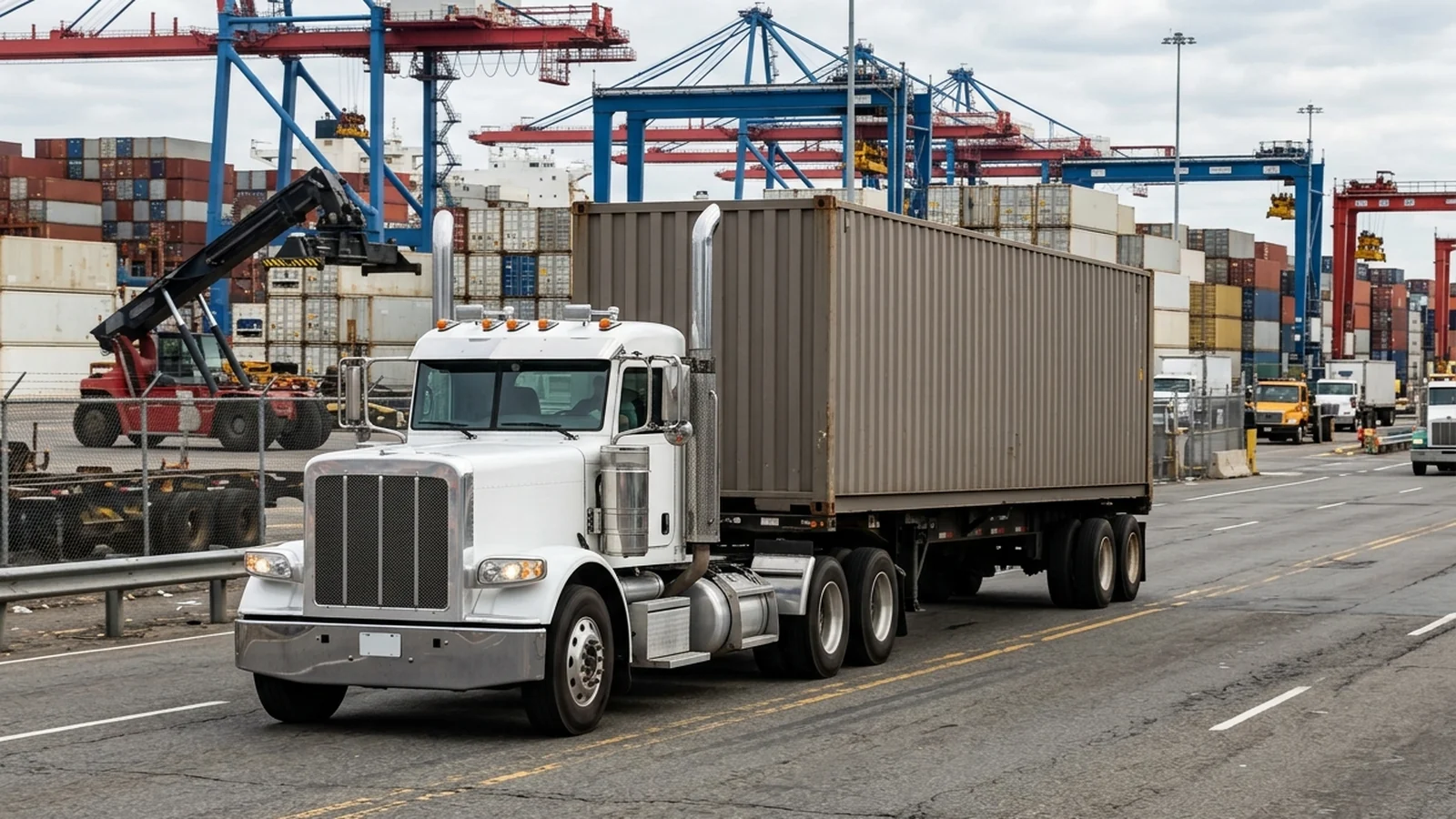
A container move through North Jersey looks simple on a map. A ship arrives at the Port Newark and Port Elizabeth complex, a container comes off the vessel, and a truck carries it a short distance to a warehouse. In practice, that short move sits on top of vessel schedules, customs and carrier releases, terminal appointments, chassis availability, free-time deadlines, receiving hours, and empty-return rules that can each change the plan.
For importers, exporters, freight forwarders, NVOCCs, brokers, and warehouse teams, the difference between a smooth move and an expensive one usually comes down to how much of that was planned before the container was ready. This guide explains how drayage actually works at the Port Newark and Port Elizabeth terminals, what has to happen before an import container can be picked up, and the information a drayage provider needs to move it cleanly.
If you want the underlying drayage mechanics that apply at any U.S. port, including chassis, free time, appointments, and empty returns, start with Container Drayage Explained.
None of what follows is terminal policy or legal advice. Terminal rules, carrier requirements, and chassis arrangements change, and they vary by shipment. Always confirm current requirements with the specific terminal, ocean carrier, and equipment provider involved in your move.
Understanding the Port Newark–Elizabeth Container Complex
The container gateway in North Jersey is run by the Port Authority of New York and New Jersey, which operates as a landlord port. It owns the marine terminal land and leases it to private terminal operators who actually run day-to-day container operations.
The complex is commonly called the Port Newark–Elizabeth Marine Terminal, but it is really two adjacent areas separated by the Elizabeth Channel:
- Port Newark, located in Newark, New Jersey.
- The Elizabeth-Port Authority Marine Terminal (often called Port Elizabeth), located in Elizabeth, New Jersey.
People use "Port Newark" and "Port Elizabeth" loosely, and sometimes interchangeably, because the two areas sit side by side and share the same port authority. Operationally they are distinct, and the terminal your container is on matters more than the general area name. A booking that says "Newark" is not specific enough to dispatch a truck. The move is planned around the exact terminal.
The complex also has on-dock and near-dock intermodal rail through the Port Authority's ExpressRail network, which connects to the Class I railroads. That matters mostly for containers moving by rail, but it is part of why the footprint is large and why terminal-specific routing and access rules exist.
Major Container Terminals Importers May Encounter
The container terminals below are the primary operators in the Newark–Elizabeth complex. Treat this as orientation, not as a source of current gate hours, appointment rules, or turn times. Those are set by each operator and change over time, so they should always be confirmed against the terminal's own current information.
- Maher Terminals (Elizabeth). One of the largest marine container terminals in North America, handling a wide range of ocean carriers.
- APM Terminals Elizabeth (Elizabeth). A major container terminal operated within the Maersk group, with significant reefer capacity.
- Port Newark Container Terminal (PNCT) (Port Newark). A major container terminal operated by Ports America.
North Jersey importers may also deal with other container terminals in the wider Port of New York and New Jersey, such as the Port Liberty facilities at Bayonne and on Staten Island. These are separate sites with their own access and appointment requirements. The key point for planning is that each terminal is its own operation, so "which terminal" is one of the first questions on any drayage move.
When the Container Arrives at a New York Terminal
Not every container in the Port of New York and New Jersey comes across at Port Newark or Port Elizabeth. The port complex also includes container terminals on the New York side of the harbor, and a container that lands there can require a very different drayage plan even when the final delivery address is the same.
The main New York-side container facilities are on Staten Island and in Brooklyn:
- Port Liberty New York, on Staten Island at the site historically known as the Howland Hook Marine Terminal, near the Goethals Bridge. It is operated by CMA CGM.
- Red Hook Container Terminal, in Brooklyn, which remains an active facility while it goes through a multi-year ownership and modernization transition.
These are separate operations from Maher, APM Terminals Elizabeth, and PNCT, and they are physically separated from the Newark and Elizabeth terminals by water. That single fact drives most of the practical differences:
- Truck routing and crossings. Reaching a Staten Island terminal from New Jersey typically involves the Goethals Bridge, the Outerbridge Crossing, or the Bayonne Bridge. A Brooklyn terminal involves its own set of crossings. The route is not interchangeable with a Newark or Elizabeth pull.
- Toll exposure. New York-side container moves can involve tolled harbor crossings that are not part of a Newark or Elizabeth pull. The actual route affects the cost of the move, so bridge and toll exposure should be considered when the terminal and delivery location are confirmed. Specific toll rates should be checked at the time of the move rather than assumed.
- Access requirements. Terminals in the complex require registered truck access, and terminal access, appointment requirements, and operating windows can differ by facility. New York-side terminals are not guaranteed to mirror Newark or Elizabeth procedures.
- Chassis positioning. Where the correct chassis is staged, and where it can be returned, can differ by terminal and by side of the harbor.
- Empty-return location. The designated empty return for a New York-side pull may be a different location than an importer would expect from a Newark or Elizabeth move.
- Delivery geography. Depending on where the container discharges, the practical distance and drive time to the same warehouse can change significantly.
The takeaway is simple and operational: the exact terminal changes the plan. A shipment described only as "New York/New Jersey port" does not contain enough information to plan, price, or dispatch accurately. Newark, Elizabeth, Staten Island, and Brooklyn moves should not be treated as identical, and the terminal has to be confirmed before a move is quoted or scheduled.
What Happens Before an Import Container Can Be Picked Up
A truck cannot simply arrive and take a container off the stack. Several conditions usually have to line up first, and if any one is missing, the container is not deliverable even if a driver is available.
The typical gates on an import container include:
- Vessel discharge. The container has to be physically off the ship and grounded in the terminal.
- Container availability. The terminal has to show the unit as available for pickup in its system, not just discharged.
- Customs status. The shipment generally needs to be released by U.S. Customs and Border Protection, and it must not be under a customs hold or exam.
- Freight release. The ocean carrier typically needs to release the freight, which often depends on payment and documentation being complete.
- Terminal holds. Terminals can place their own holds for a range of reasons, and those must be cleared.
- Delivery order or release requirements. Depending on the carrier and terminal, a release or delivery order may be required before the unit can move.
- Appointment. Where a terminal requires an appointment, one usually has to be secured for the correct move type and time window.
These requirements are not identical across terminals, carriers, shipments, or cargo types. A container can show "discharged" and still be days away from deliverable if it has a hold, is not yet released, or cannot get a near-term appointment. This is why release status should be tracked actively, not assumed.
Chassis Planning in North Jersey
An ocean container does not travel on its own wheels. It rides on a chassis, the wheeled frame pulled behind the tractor. In North Jersey, chassis supply is a real operational variable, not a detail.
The Port of New York and New Jersey uses an off-dock, independent chassis model rather than a single unified pool. Chassis are supplied by providers such as TRAC Intermodal, DCLI, and Flexi-Van, and units are often staged at off-terminal depots rather than only at the marine terminals. Several factors affect a given move:
- Ocean-carrier arrangements. How the chassis is provided can depend on the ocean carrier and the booking.
- Provider and pool considerations. Not every chassis fleet is freely interchangeable, and interoperability between providers can vary.
- Equipment availability. Standard, tri-axle, and specialized chassis are not always equally available, and availability can shift day to day.
- Matching the chassis to the move. The equipment has to fit the container size and the weight of the cargo, which is where overweight and reefer moves get more involved.
Because these arrangements change, chassis should be confirmed as part of planning the move rather than discovered at the gate. The wrong chassis assumption is one of the more common causes of a delayed or failed pickup.
Moving containers through North Jersey?
Send the terminal, delivery location, container details, equipment requirements, and timing to Spartanus Cargo Systems so our team can review the complete move and available capacity.
Request a QuoteFree Time, Demurrage, Detention and Storage
These terms get used loosely, but they describe different exposures, and importers benefit from knowing which is which.
- Free time is the period during which a container or equipment can sit in a given stage before additional charges may begin. It is defined by the terminal, carrier, and contract.
- Last free day is the practical deadline importers watch most closely. It is the point after which demurrage-type charges can start to accrue.
- Demurrage is generally associated with a loaded container remaining at the terminal beyond its allowed free period.
- Detention is commonly associated with carrier equipment being held outside the terminal longer than allowed.
- Storage and related charges can apply in various scenarios depending on the terminal and carrier.
The exact rules, amounts, and definitions vary by terminal, ocean carrier, equipment provider, and contract, and this is not legal advice or a single universal rule. The operational takeaway is simpler: know the last free day early, and do not treat it as the day to start planning. By the last free day a container may still need a release, a chassis, an appointment, a receiver, and a confirmed empty-return location, and any one of those can close the window.
Delivery Appointments Can Control the Move
Drayage timing is not controlled only by the terminal. The receiving side matters just as much. Many warehouses and distribution centers receive by appointment, with set hours and limited daily slots.
That creates a common mismatch: a container can become available at the terminal before the receiver has an open appointment to take it. When that happens, the loaded container may need to wait, which can pull it toward the last free day and can involve additional equipment time. In other cases the receiver has an appointment before the container is released, and the truck cannot move yet.
The move has to connect two separate schedules, the terminal's and the receiver's, and those do not line up automatically. Confirming the receiving appointment early is one of the most effective ways to keep a North Jersey move on plan.
For customers that need additional flexibility between the port, warehouse, or staging location, Spartanus can also provide a dedicated yard-move fleet where operationally appropriate and subject to capacity. This can help separate the port pull from the final delivery when receiving schedules, free-time pressure, staging requirements, or warehouse timing make a direct terminal-to-customer move impractical.
Empty Container Returns
The move is not finished when the loaded container is delivered. Once an import container is unloaded, the empty normally has to be returned to the location designated by the ocean carrier or equipment provider, and that return leg is part of the job.
A few realities make empty returns their own planning item:
- The return location may not be the origin terminal. Empties are directed to specific locations that can differ from where the loaded container came out.
- Instructions can change. A return location can be updated even after the loaded container has been delivered.
- Depots and terminals have restrictions. Where and when an empty can be returned can be limited, and returns can be constrained when a location stops accepting a given container or chassis type.
Because return instructions can change and affect mileage, driver time, and chassis usage, the correct empty-return location should be confirmed, not assumed. The real cycle is closer to terminal, then customer, then empty return, and the whole cycle affects cost and scheduling.
Overweight Containers
Heavy import containers are not just a bigger version of a normal move. Weight changes the equipment and the planning.
Overweight container moves can require:
- The correct chassis or equipment configuration for the weight.
- Axle-weight planning so the load is legal on the road.
- Routing that accounts for weight and any restrictions.
- Permits where applicable.
- An operational review before dispatch rather than after.
Legal weight limits and permit requirements are jurisdiction specific and change, so they should be confirmed for the specific move rather than assumed. The important rule is to identify weight early. Cargo weight belongs in the initial shipment information so the move can be built correctly from the start.
Refrigerated Containers
Refrigerated (reefer) containers add a layer of coordination because the cargo has temperature and power requirements that continue while the container is in transit and on the ground.
Reefer drayage may involve:
- A confirmed set temperature.
- Genset availability where the move requires portable power.
- Monitoring expectations during the move.
- Receiving appointments at temperature-controlled facilities, which can be tighter.
- Equipment checks before dispatch.
For refrigerated container work, Spartanus has dedicated underslung genset chassis available for qualifying moves. This can reduce dependence on locating and mounting a separate portable genset when the container, lane, and operating requirements are compatible. Equipment availability, container compatibility, and shipment requirements still have to be confirmed for each move, and not every reefer movement will use this equipment.
These requirements should be communicated at the start of the quote or capacity conversation, not after a truck is assigned, because they affect equipment planning and timing. Coordination between the terminal, the transportation provider, the receiver, and the equipment provider is what protects temperature-sensitive cargo through the drayage leg.
Port Drayage vs Regional Container Transportation
Not every North Jersey container move is a short local delivery. Many containers do stay close to the port, but a large share move well beyond the immediate market.
From the Port Newark and Port Elizabeth complex, containers routinely move regionally into Pennsylvania, New Jersey, New York, Connecticut, Delaware, Maryland, and other commercially appropriate markets. The planning principles are the same regardless of distance, but longer moves leave less room to recover from a missed step, so the container, equipment, appointment, receiver, time limits, and empty return all have to be coordinated up front. Whether a move is best handled as a spot container or as dedicated or recurring capacity often depends on volume and lane consistency.
For containers that continue south into the Delaware River market, see our Philadelphia container drayage guide.
Information to Give Your Drayage Provider Before the Container Arrives
The more complete the initial information, the more accurately a move can be planned and priced and the fewer surprises appear at the gate. A useful North Jersey drayage request generally includes:
- Container number
- Container size and type
- Steamship line (ocean carrier)
- Terminal
- Release information
- Customs status
- Last free day
- Delivery address
- Receiving appointment or receiving hours
- Cargo weight
- Commodity
- Hazmat status, if applicable
- Reefer and genset requirements, if applicable
- Any special equipment requirements
- Empty-return instructions, if known
Not every field is available at the same moment, but sharing what is known early, and updating the rest as it firms up, is what lets a provider plan the move instead of reacting to it.
Common Planning Mistakes
Most drayage problems are not exotic. They repeat. The most common ones at the port include:
- Waiting until the last free day to begin serious planning.
- Assuming that "available" means the container can be delivered immediately.
- Not confirming chassis requirements or availability.
- Not checking the receiving appointment before assuming a delivery date.
- Overlooking cargo weight until it becomes an equipment problem.
- Treating the empty return as an afterthought.
- Providing incomplete release or terminal information.
Each of these is avoidable with information and lead time, which is exactly what the checklist above is for.
Planning North Jersey Container Drayage
A container move through Port Newark or Port Elizabeth is short in miles and long in coordination. The terminal, the release, the chassis, the appointment, the free-time clock, the receiver, and the empty return all have to line up, and they rarely do so on their own. The importers who move freight cleanly through North Jersey are usually the ones who plan the full cycle before the container is even available.
Spartanus Cargo Systems provides container drayage and regional container transportation in North Jersey, including import and export containers, dry and refrigerated container drayage, hazmat where requirements are met, overweight containers where legally and operationally appropriate, and dedicated capacity, subject to equipment availability and shipment requirements.
If you are planning containers through the Port Newark and Port Elizabeth complex, send the terminal, delivery location, container details, equipment requirements, and timing so the complete move can be reviewed before dispatch.
Related Insights
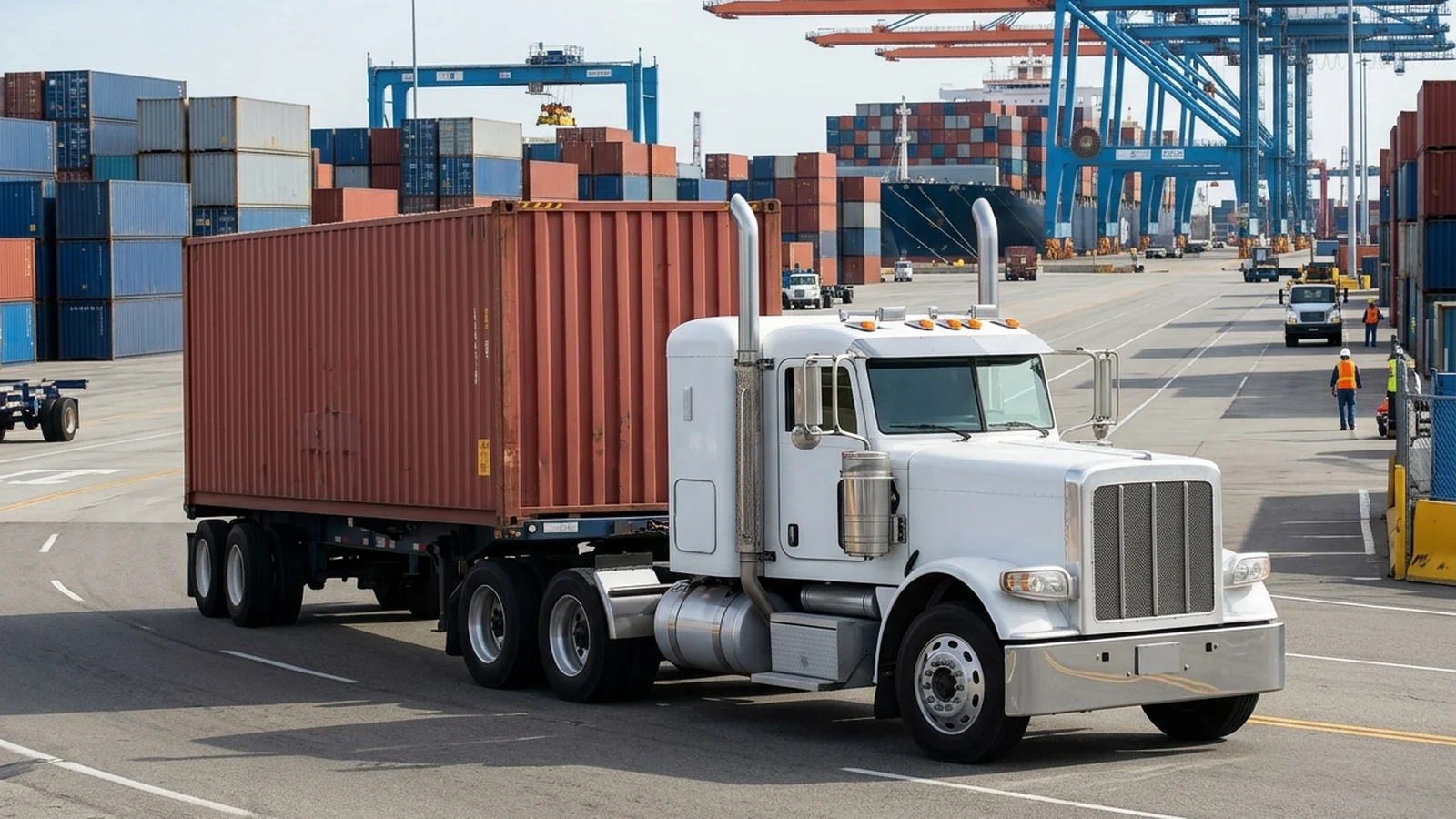
Container Drayage Explained: Import, Export, Chassis, Free Time & Empty Returns
A practical guide to container drayage for importers, exporters, brokers, and logistics teams, covering terminal pulls, chassis, appointments, free time, empty returns, and the details that keep containers moving.
Read More
Import Container Drayage Checklist: From Arrival Notice to Empty Return
A practical, step-by-step import container drayage checklist for importers and logistics teams, from arrival notice and release through last free day, chassis, pickup, delivery, and empty return, with a printable summary and common mistakes to avoid.
Read More
Overweight Container Drayage: Permits, Chassis & Planning
A practical guide to overweight container drayage for importers and logistics teams: what makes a container overweight for the road, why axle distribution and chassis configuration matter, how permits and routing come into play, and what a drayage provider needs before quoting.
Read MoreStart the Capacity Discussion
Spartanus Cargo Systems provides container drayage, refrigerated container transportation, specialized container services, and regional freight solutions across key Mid-Atlantic and Gulf Coast markets.