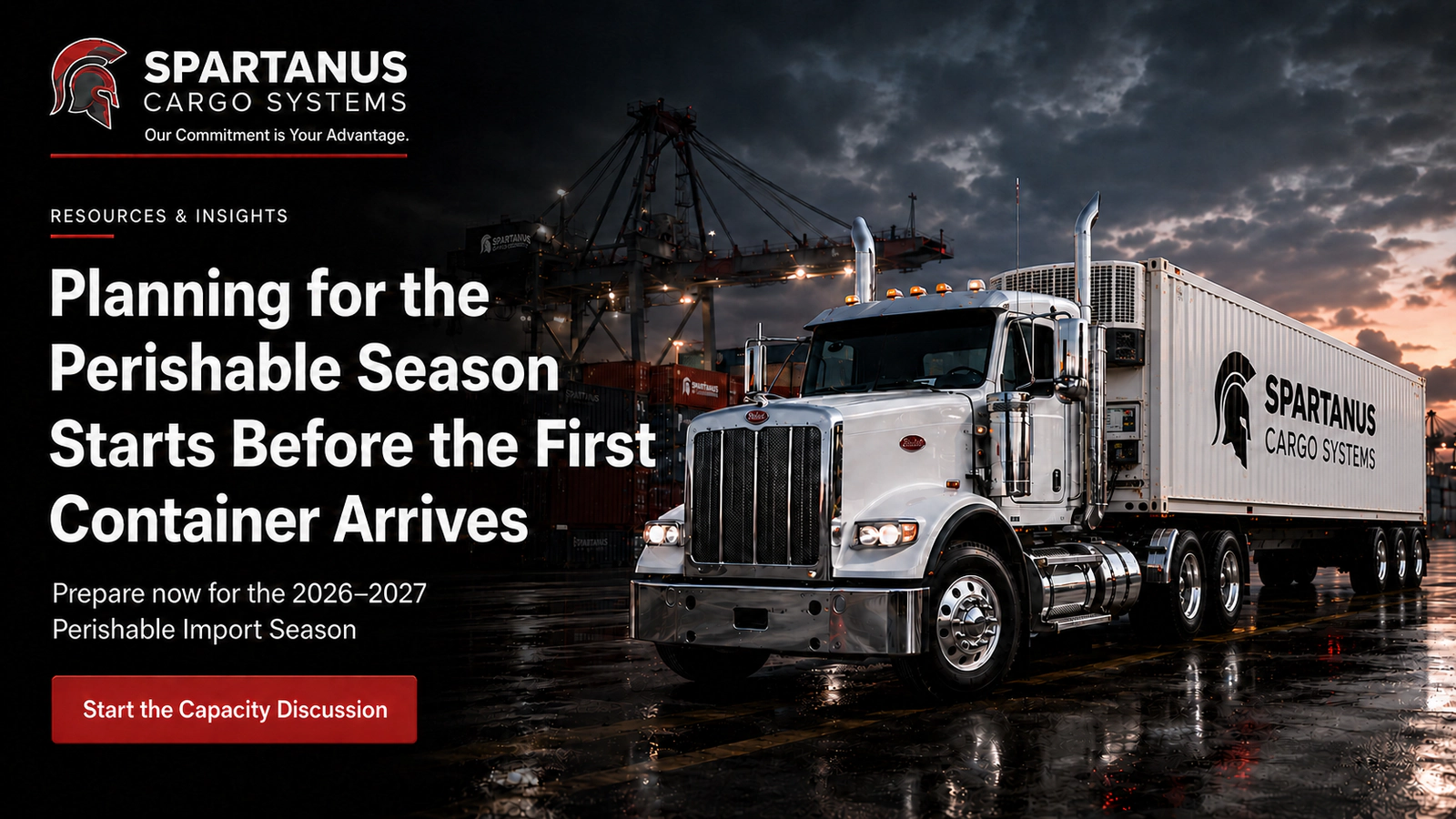
Planning for the Perishable Season Starts Before the First Container Arrives
Perishable season success starts with planning. Learn how importers, brokers, and logistics teams can prepare refrigerated container drayage capacity before peak season begins.
When the perishable import season begins, most companies focus on the same immediate questions:
- Where are the containers?
- Can they be pulled today?
- Is the required equipment available?
- Can the delivery be completed on time?
- Who is providing shipment updates?
- What happens if the terminal is congested or the appointment changes?
Those are important questions, but they are not the right place to begin.
By the time the first container arrives, the transportation planning should already be complete.
Perishable freight creates little room for confusion. Delays, equipment problems, missed appointments, and communication failures can affect warehouse operations, customer commitments, product condition, and the performance of the entire supply chain.
Peak season does not suddenly create weaknesses in a transportation program.
It exposes weaknesses that were already there.
That is why planning for the perishable season must start before the first container arrives.
Peak Season Rewards Preparation
Companies that manage seasonal perishable imports successfully are rarely improvising once volume reaches the port.
They have already reviewed their expected shipment flow, delivery requirements, equipment needs, communication standards, and transportation capacity.
A strong plan should address more than whether a truck might be available.
It should include:
- Anticipated weekly container volume
- Port and terminal locations
- Refrigerated container requirements
- Chassis and genset needs
- Warehouse receiving schedules
- Appointment restrictions
- Tracking and communication expectations
- Weekend and after-hours procedures
- Regional delivery requirements
- Contingency plans for delays and disruptions
- Available drayage capacity
When these areas are not addressed early, peak season becomes a cycle of reacting instead of executing.
The Mistake Many Companies Make
One of the most common mistakes importers, brokers, and logistics teams make is waiting until freight is available before beginning serious transportation discussions.
By then, the operating window has already narrowed.
Volume may be increasing. Terminal activity may be heavier. Delivery appointments may be limited. Equipment availability may be tighter. Warehouses may be operating under stricter receiving schedules.
Every unresolved detail becomes more difficult to manage under pressure.
There is an important difference between transportation availability and transportation readiness.
Availability asks:
“Can we find a truck when the container becomes available?”
Readiness asks:
“Have capacity, equipment, communication, delivery requirements, and contingency procedures already been coordinated?”
The second approach creates a stronger operating plan.
What a Strong Perishable Drayage Plan Should Include
Companies preparing for seasonal refrigerated imports should review several areas before peak volume begins.
1. Expected Container Volume
A drayage provider needs visibility into the expected freight flow.
A carrier cannot responsibly plan capacity around information it does not have. Even when forecasts may change, a working estimate gives the transportation provider a better foundation for equipment and driver planning.
Important questions include:
- How many containers are expected each week?
- Which weeks are likely to carry the highest volume?
- Will containers arrive consistently or in concentrated surges?
- What percentage of the freight will require expedited handling?
- Will same-day or next-day delivery be expected?
- Which delivery areas will receive the highest concentration of freight?
A forecast does not have to be perfect to be useful.
It must be communicated early enough to support planning.
2. Port and Market Alignment
The transportation provider must be properly positioned for the ports, terminals, and delivery regions involved in the program.
Not every drayage provider is structured for every market.
Companies should confirm:
- Which ports and terminals the carrier currently services
- Whether the carrier can support local and regional delivery requirements
- Whether additional market coverage will be needed during peak periods
- Whether the carrier understands the operating requirements of the relevant terminals
- Whether the carrier has a plan for volume increases in each market
The transportation plan must reflect the actual freight network—not just the location where the container is discharged.
3. Refrigerated Equipment Coordination
A tractor alone does not create complete refrigerated-container capacity.
Companies should identify all equipment requirements before the season begins.
This may include:
- Refrigerated container handling requirements
- Chassis availability
- Genset requirements
- Tri-axle requirements for heavier containers
- Overweight permits or equipment
- Temperature-monitoring procedures
- Pre-pull or storage requirements
- Special warehouse or facility restrictions
When equipment requirements are discovered after a container becomes available, the shipment may already be at risk of delay.
Equipment planning must be part of capacity planning.
4. Receiving Hours and Appointment Restrictions
A transportation plan that ignores the receiving facility is incomplete.
Warehouse hours, appointment availability, turnaround times, delivery restrictions, and weekend procedures all affect how many containers can realistically be completed.
Before the season begins, confirm:
- Receiving hours
- Appointment-booking procedures
- Same-day cutoff times
- Weekend receiving capability
- After-hours contacts
- Driver check-in requirements
- Facility-specific restrictions
- Expected unloading or waiting times
- Procedures for late or missed appointments
A carrier may have trucks available, but limited receiving windows can still reduce daily capacity.
The entire delivery process must be evaluated—not only the port pickup.
5. Communication and Tracking Standards
Transportation problems become more damaging when communication is inconsistent.
Customers should know:
- Who their primary contact is
- When shipment updates will be provided
- Which milestones will be communicated
- How delays will be reported
- Who receives escalation notices
- How appointment changes will be handled
- What information will be available after regular business hours
A clear communication process prevents customers from having to repeatedly search for answers.
During perishable season, silence creates uncertainty.
Proactive communication creates control.
6. Contingency Planning
A serious perishable import program should not be built around the assumption that every shipment will move exactly as planned.
Operational disruptions can include:
- Terminal congestion
- Vessel schedule changes
- Customs or inspection holds
- Chassis or genset shortages
- Mechanical problems
- Weather disruptions
- Warehouse appointment changes
- Missed delivery windows
- Unexpected volume surges
The transportation provider and customer should discuss how exceptions will be handled before those exceptions occur.
A contingency plan should establish:
- Escalation contacts
- Communication responsibilities
- Priority-load procedures
- Alternate delivery timing
- Pre-pull options
- Weekend or after-hours procedures
- Equipment replacement processes
- Expectations when the original plan is no longer possible
Preparation does not eliminate every disruption.
It reduces confusion when disruption occurs.
Prepare Before Peak Volume Arrives
Start a conversation with Spartanus Cargo Systems about upcoming container volume, refrigerated transportation requirements, delivery regions, and operating expectations.
Start the Capacity DiscussionQuestions to Ask a Drayage Provider Before Peak Season
Before assigning seasonal freight, importers, brokers, and logistics teams should ask direct questions.
- Can you support refrigerated container drayage in our required markets?
- What information do you need to plan capacity?
- How do you manage seasonal volume increases?
- How are shipment updates provided?
- What is your escalation process?
- How do you coordinate chassis and genset requirements?
- Can you support regional container transportation?
- How do you handle weekend and after-hours communication?
- What happens when appointments or vessel schedules change?
- How far in advance should volume forecasts be provided?
The quality of these answers often reveals whether the provider is prepared to operate as a transportation partner or is simply waiting for individual loads.
A Strong Drayage Partner Provides More Than a Truck
The right drayage provider should bring more than basic movement capacity.
A strong provider should help customers:
- Identify operational risks
- Clarify equipment requirements
- Establish communication standards
- Understand delivery constraints
- Prepare for seasonal volume
- Develop contingency procedures
- Coordinate local and regional transportation needs
At Spartanus Cargo Systems, we believe strong transportation partnerships are established before problems begin.
Our approach is built around preparation, proactive communication, and disciplined execution.
We support:
- Container drayage
- Refrigerated container drayage
- Import and export containers
- Regional container transportation
- Hazmat container transportation
- Overweight container transportation
- Time-sensitive seasonal freight
Our objective is not simply to respond when a container becomes available.
It is to understand the operation early enough to help create a stronger transportation plan.
Why Early Planning Matters
Perishable freight is not forgiving.
Weak transportation planning can create:
- Delivery disruptions
- Equipment delays
- Missed appointments
- Warehouse pressure
- Communication failures
- Customer-service problems
- Unnecessary operational costs
- Reduced flexibility during peak volume
Early planning gives the shipper and carrier time to identify gaps while there is still time to correct them.
The purpose is not to create unnecessary meetings or paperwork.
The purpose is to establish a cleaner and more reliable path from the port to final delivery.
Start Before the First Container Arrives
If your company is preparing for the 2026–2027 perishable import season, now is the time to review:
- Expected container volume
- Port and terminal requirements
- Refrigerated equipment needs
- Delivery regions
- Receiving schedules
- Tracking expectations
- Contingency procedures
- Available transportation capacity
Waiting until the first container becomes available is not early planning.
It is late reaction.
A stronger program begins with clear expectations, coordinated resources, and a transportation partner that understands the operating requirements before peak season begins.
Start the Capacity Discussion
Spartanus Cargo Systems works with importers, brokers, distributors, warehouses, and logistics teams that need dependable container drayage and regional transportation support.
If your company is preparing for refrigerated import volume through Philadelphia, North Jersey, Savannah, or Gulfport, start the capacity discussion with our team.
Share your anticipated volume, delivery requirements, equipment needs, and season timeline so we can evaluate how Spartanus Cargo Systems may support your operation.
Spartanus Cargo Systems
Our Commitment is Your Advantage.
Related Insights
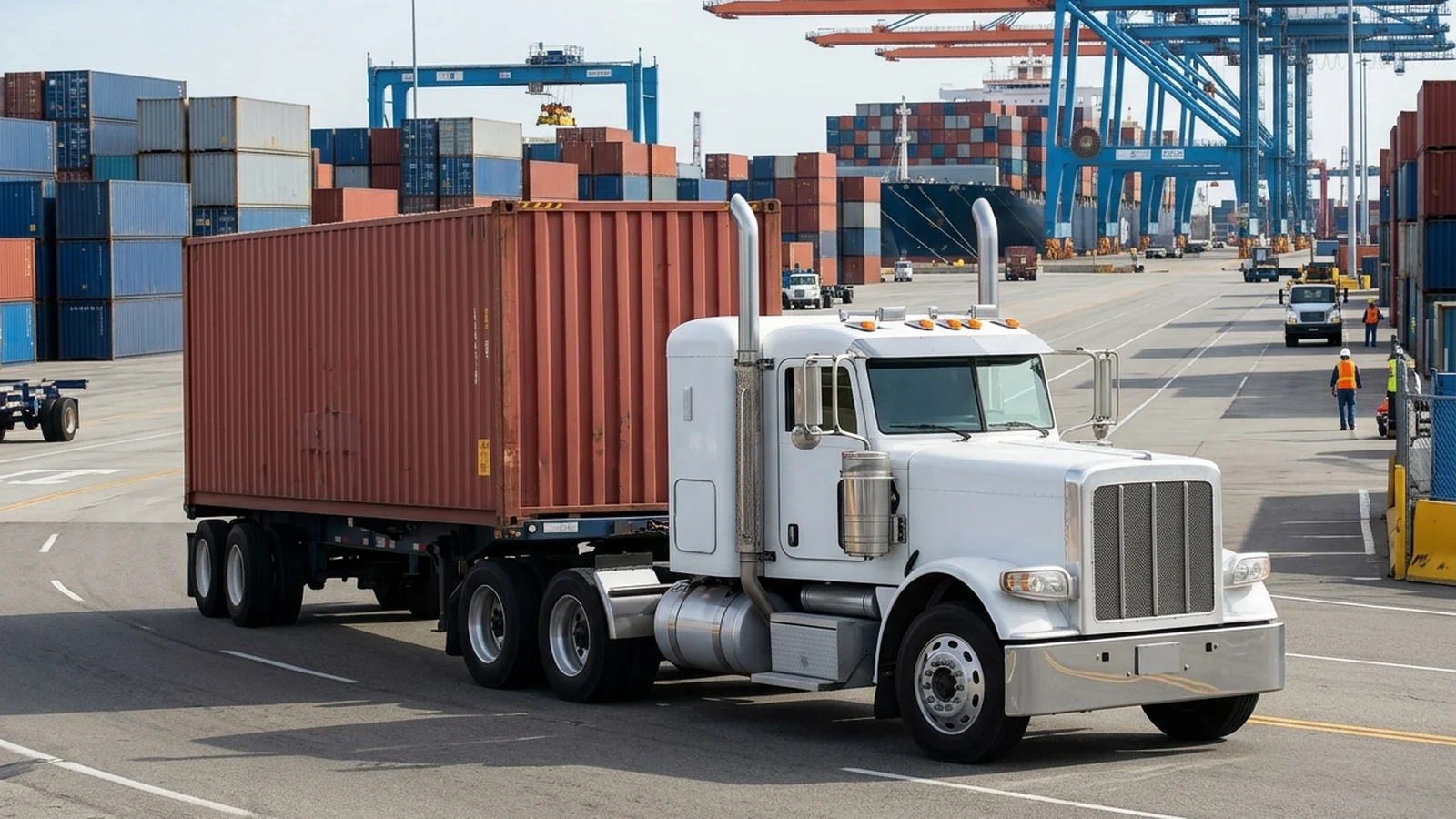
Port of Baltimore Container Drayage Guide for Shippers
A practical guide to Port of Baltimore container drayage, including Seagirt, releases, chassis, appointments, free time, specialized freight, and local, regional, and OTR planning.
Read More
Port of Gulfport Container Drayage Guide for Shippers
A practical Port of Gulfport drayage guide covering container readiness, equipment, free time, reefer freight, empty returns, and local, regional, and OTR transportation.
Read More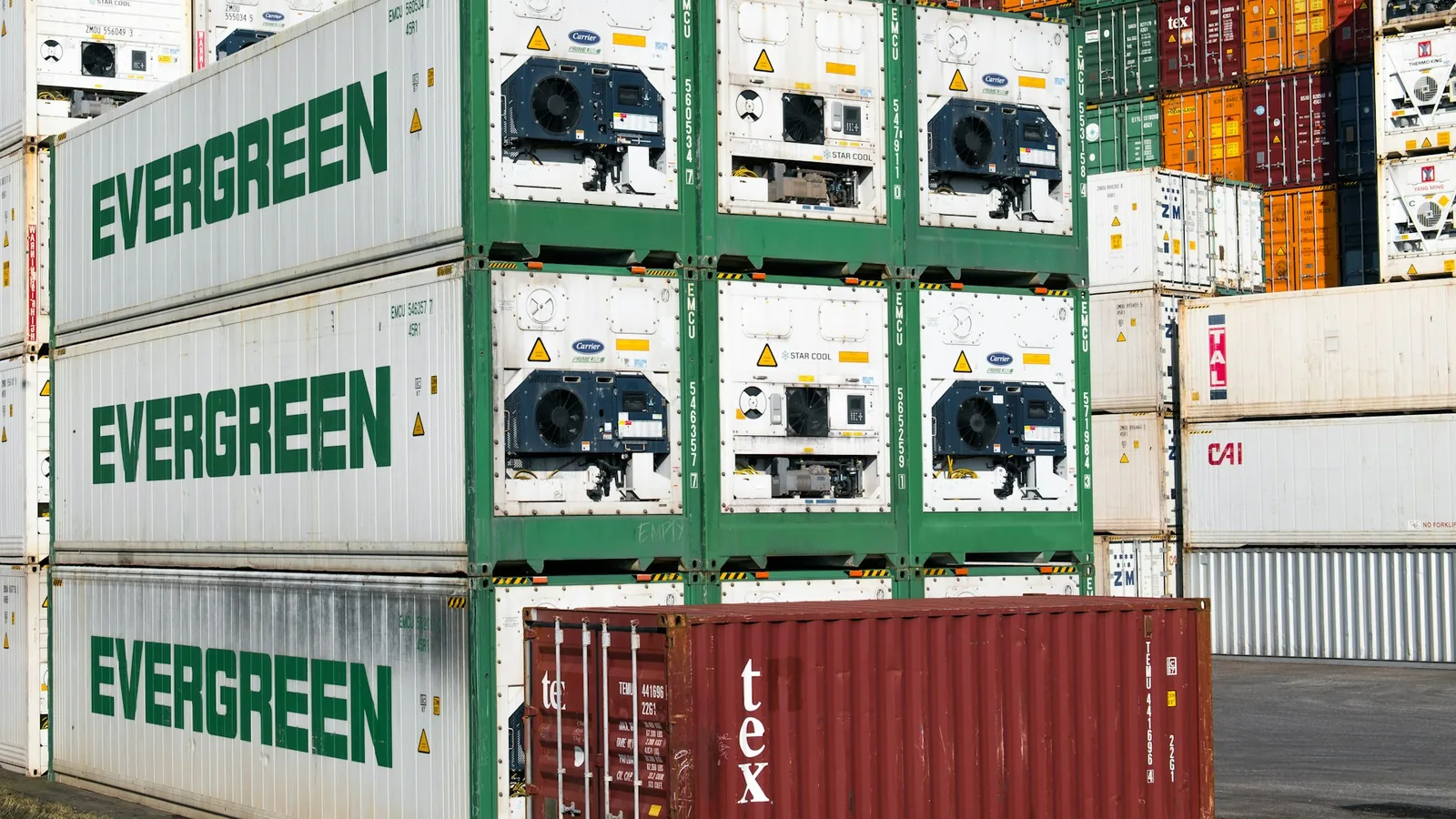
Refrigerated Container Drayage: Gensets, Temperature Control & Perishable Freight
A practical guide to refrigerated container drayage for importers, exporters, produce companies, and logistics teams, covering reefer chassis, portable and underslung gensets, temperature requirements, terminal release, free time, pre-pulls, regional delivery, and empty returns.
Read MoreStart the Capacity Discussion
Preparing for refrigerated import volume through Philadelphia, North Jersey, Savannah, or Gulfport? Share your expected volume, delivery requirements, equipment needs, and season timeline with Spartanus Cargo Systems.